
Some of the the success stories are illustrated as below :
Ratna Das , Father’s Name – Late Kanta Das , Village – Barpani, District-Simdega
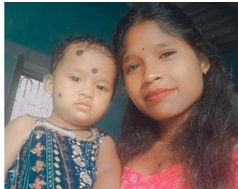
Ratna Das , a Dalit daughter of Late Kanta Das is busy preparing 250gm-packets of oyster mushrooms at her home in Barpani village of Simdega district. It is a tribal hamlet of remote areas in the district in Jharkhand. The packets of the much sought after mushrooms will sell for Rs.50 each in Ranchi and Jamshedpur towns. With the help of Inside Jharkhand , Ratna Das is now a mushroom entrepreneur, cultivating them in a corner of her house and earning enough to support her family. “Unlike vegetables or cereal crops, mushrooms do not require much manual labour, financial investment or time. Mushrooms have a short growth cycle and its cultivation is a good option for women to become financially independent,” says Ratna Das. The produce easily finds a market as mushrooms are a part of indigenous food of Jharkhand’s tribal communities including as well as non-tribals. Besides oysters, other varieties like button mushroom and the rare rugda, which grows under Sal trees during monsoon, are also integral to Jharkhand’s food culture. With limited livelihood options in our village, mushroom cultivation has opened a new avenue for increasing incomes as it has a ready market. We find local buyers and are also able to sell it in Ranchi and Jamshedpur, says Ratna Das. The land in our area is mostly barren. Barring tomatoes and some paddy cultivation during monsoon, there is not much scope for growing other crops,” the beneficiary says. Besides, meeting the water requirements of crops is expensive as well as difficult, almost ruling out agriculture as an occupation for women in this region, she adds. Oyster mushrooms can grow at temperatures upwards of 20 degree Celsius with humidity of 55-70 percent. “The cultivation season starts in August and lasts till March or April,” says Ratna, adding she are now able to cultivate it in summer also. The process begins with cutting paddy straw into 2-inch pieces. Then the straw is soaked in warm water for a few hours. Subsequently, it is air-dried while retaining about 70 percent moisture and spawn is mixed. This mixture is then filled in polythene bags on which perforations are made. The bags are tied and kept in a dark humid place with a temperature between 24 and 30 degree Celsius. In about 20 days, the straw is covered with hyphae and the bags are hung with a string at a minimum gap of 30 cm from each other. Small growth appears in a few days and the first flush of mushrooms is harvested in a total of about 35 days. The second harvest is ready again after a gap of 35 to 40 days followed by the third and final harvest. The output declines with subsequent harvests, but a kg of seeds end up giving up to 12 kg mushroom. Dried mushrooms can be rehydrated with warm water before use. Their nutty, subtle flavour makes them a good addition to soups, sauces and stews. Having tasted success with mushrooms, more and more women in Simdega are now taking up its cultivation. “We are looking at it as a full-fledged business going forward. We are going to every house and asking other women to join us,” Ratna adds.
Mansi Oraon , Husband Name – Pankaj Oraon , Village – Bhanwarpani, Panchayat-Barabarpani, District -Simdega
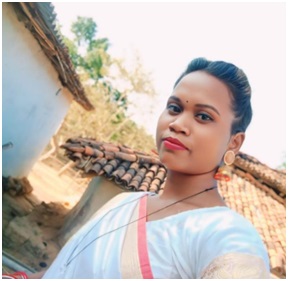
With an aim to utilize kitchen waste, Mansi Oraon- a tribal woman and wife of Pankaj Oraon, of village Bhawarpani, panchayat Barabarpani in Simdega district bought piglets of improved breeds from Inside Jharkhand . She got the training on “Capacity building of Pig Farmers” and She was fortunate enough to attend it. Dibya could conceive scientific methods of pig farming. Good breeds, housing and feed management, healthcare and marketing strategies in pig rearing were discussed in the programme by the expert scientists. In the mean time she could manage to construct two rooms for the pig rearing. She bought five females and male piglets to start my dream project. Consistent support and expert knowhow of Inside Jharkhand, made me feel confident in going with the project. She could attend a number of programme organized by Organisation both on and off the farms. Now She is quite ambitious with the project. Her first batch of five pigs started furrowing piglets one after other after about a year. She could fetch good returns from the first lot by selling about 32 piglets for Rs 35200/-. She is now happy and confident on this enterprise and it is proving to flourish in the days to come.
Monia Sagar, Father’s name – Yogesh Sagar, Trained in Skill – Self Employed Tailor , Place of Training – Jan Shikshan Sansthan, Ranchi , Parent Organization – Inside Jharkhand , Ranchi
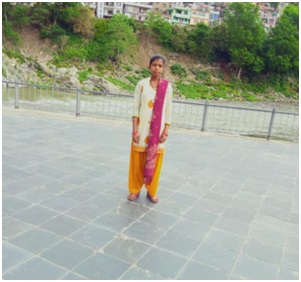
Monia belongs to the Dalit Community . She is the eldest daughter in the family; she has three sisters and a brother. Family lives in a rented room with parents. Her father Yogesh Sagar works as a daily wage laborer in the construction sites and mother does house hold chores. Family earning is comparatively low to meet the requirements hence; Monia also started helping her mother in work. Many a times, Monia would help women (where she worked as domestic helper) in hair dye by applying Henna. Gradually Monia became expert in henna dye for hair. She developed interest in ‘Beauty care services’ but she required money to learn the skill. As Monia has interest in learning beautician course, she started talking to her neighbors regarding this. One day, a meeting was organized in her area by Field Coordinator Bandhan Hemrom. Monia came to know about this event and she attended this meeting. During this meeting she discussed with Bandhan Hemrom about her interest in learning Beautician Course. The moment she learnt about the ‘ free of cost’ training in Jan Shikshan Sansthan, she was so thrilled and asked about the process of getting admission. For the year 2021-22 batches, she got enrolled for four months training on Assistant Beauty Therapist at free of cost. Monia completed the training successfully by continuing her job at others’ houses. After completion of her ‘Assistant Beauty Therapist’ course, she started providing ‘ door to door’ beautician services like – Hair Henna, massage, facial, eyebrow, hand henna etc. that provided her to earn extra money. After few days, Monia had opportunity to join Ladies Beauty Salon called Lady Line Beauty Salon at Harmu Tungritoli near to her home. She earns Rs.12, 000 per month. Her income increased and now she bears the expenses of her two younger sisters’ education as well as she supports her parents too. Monia is Matric Pass, now she wishes to pursue higher education through distance education. She is satisfied with her hard work and thankful to Inside Jharkhand for changing her life.
Nisha Karkatta, Husband’s name – Bhuchha Karkatta,
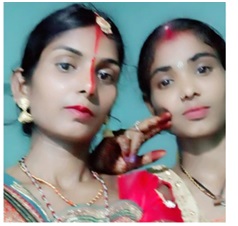
Nisha Karkatta , a Tribal of Jharkhand resides in the Khunti district of Jharkhand. Her husband is unskilled farmer and seasonal worker who don’t earn enough to feed their family. Nisha has six siblings who all study in a village based school. She failed in her class 10 board exams. She never got proper education. The financial condition of the family was so weak that no proper guidance was provided to her before her board exams. Her mother always remained in a disturbed state of mind because her children were not getting a proper education and at the same time they could not afford to provide them the necessary condition for education. They could not even afford to buy notebooks and other stationeries. There came a certain point of time when Nisha actually surrendered her fate to God. She had no hopes left for her future.
She thought that her life in no more substantial and earnest. But her opinion towards life radically changed when she was taken up by Inside Jharkhand as a student. Her life took a beautiful turn as she got the real meaning of education. She very well realized that it is only through education that she can fetch income for the family and provide a proper financial aid to her parents. Nisha is very grateful to Inside Jharkahnd as it played a major role in transforming her life. She is very happy to find her new friends in the same institute who also belong to economically weak and underprivileged strata of the society. Now she has full belief in herself and the organization.
She also feels very privileged as the organization not only provides with food and basic necessities but also gives them an opportunity to take part in co-curricular activities. She became matriculate, by getting 65% marks from Jharkhand Academic Council. She gives the entire credit of getting of First Class to Inside Jharkhand .Her aim is to be a nurse so that she can take care of the ailing people. At the same time she want to make her husband very proud of her abilities and wishes that he have a comfortable life in the near future
Leeta Toppo , Tribal from Latehar district , Jharkhand
“My name is Leeta Toppo; I belong to Latehar district. I have taken training in 2008 under Yuva Jyoti. I want to see myself as a good motor-cycle mechanic. With the help of Inside Jharkhand and State Bank of India-Chandwa branch I opened my own shop. At the beginning some of the motor -cycle mechanics tried to create problems for me. Then it was very difficulties for me to survive, but now my earnings have reached to Rs.4000-5000 due to Inside Jharkhand’s support”.
Suchitra Meshram Dalit Girl from Chatra district , Jharkhand(Name changed to maintain anyonymity), Victim of Human Trafficking
Suchitra Meshram is a Dalit women who was being sexually exploited by several Upper Caste males in the remote district of Chatra. Thereafter she had been brutally beaten up and was being trafficked to the state of West Bengal .Inside Jharkhand filed report with the local police , rescued and rehabilitated the woman . Inside Jharkhand helped the police uncover a human trafficking racket operating on the eastern Indian border which lead to arrests of several upper caste mafia responsible for this crime .
- Education promotion models established by Inside Jharkahnd in Girdih and Gumla districts have been replicated in entire state of Jharkhand and Bihar.
- Inside Jharkhand conducts research and makes recommendations to the Government based on the field reality of the situation of Tribal & Dalit people . This has influenced the policy of State Government on different issues of Tribal and Dalit people. Recently conducted Panchayat Election is an illustration of efforts of grass root institution developed by Inside Jharkhand
- Education and livelihood opportunities for Dalit girls and Tribal youth through Jan Sikshan Sansthan of Inside Jharkhand have created enthusiasm among the deprived section of the society. Parents are now keen to send their children in different schools and vocational courses. Inclination of Dalit girl children towards education has increased everywhere.
- Youth mobilization programmes Yuva Vikas Mahotsava initiated by Inside Jharkhand has received tremendous response in the entire state. Now without the assistance of Inside Jharkhand , youth are being able to organize these events in their respective Blocks